Bespoke systems
Custom systems, designed around the process and built to last.
The following are distinct capability areas, drawn from delivered engagements. We design the business process first and then build the software that operates it. Most engagements combine several of these areas.




Internal business automation
We replace manual processes in full, rather than making existing slow ones marginally faster. The process is designed first, and the software is then built to implement it.
- Proposal and document generation from structured inputs, producing consistently formatted quotes and statements of work.
- Pricing engines that calculate from live cost data, removing reliance on manually maintained spreadsheets.
- CRM synchronisation and email automation that keep records current without manual data entry.
- Integration across HubSpot, Salesforce, NetSuite, the Microsoft Power Platform (Power Apps, Power Automate and Dataverse), Outlook and Google Workspace.
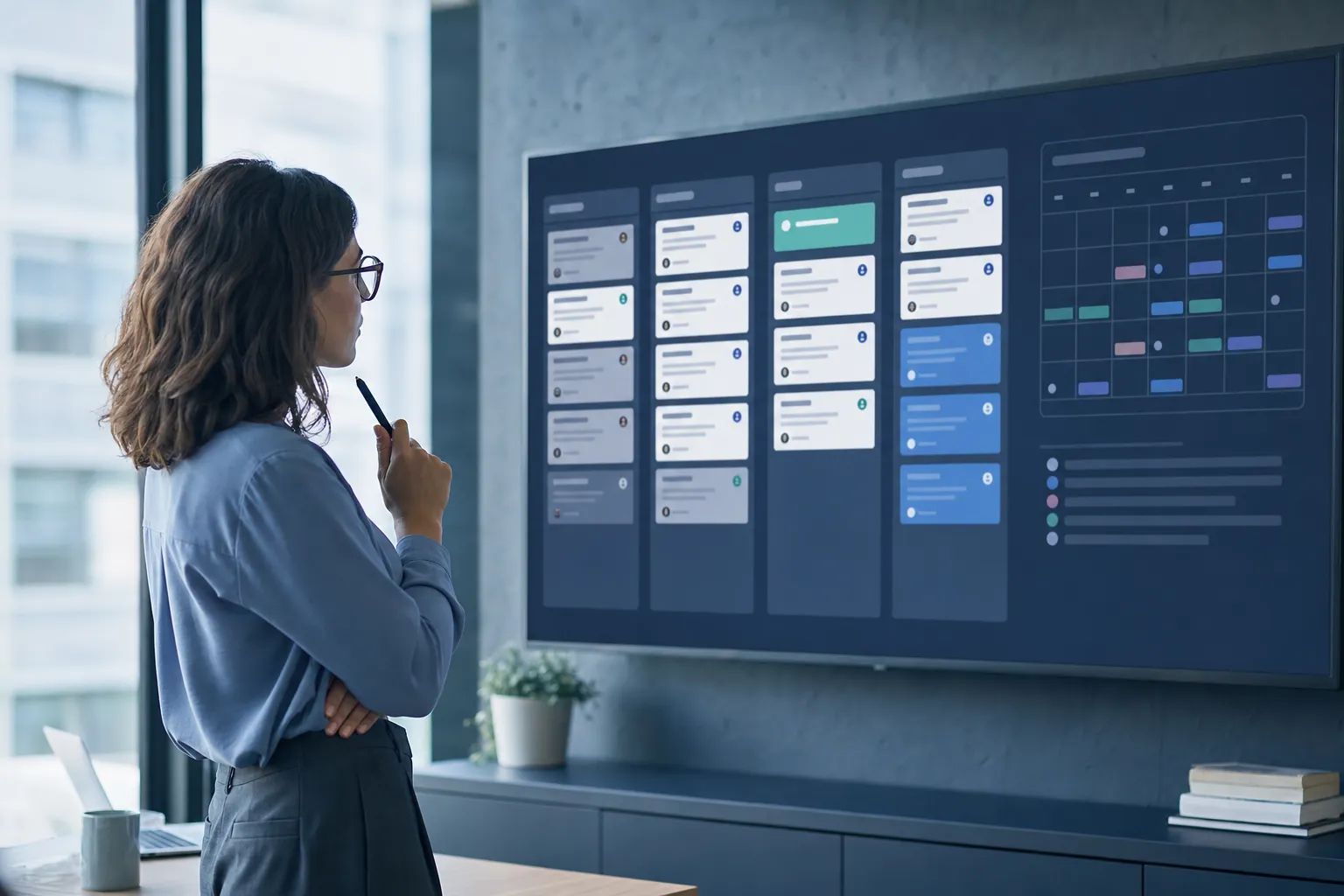

A complete automated marketing team
A single system that does the work of a marketing team. It captures the signals your business already produces, from market news to meetings to email, turns them into content, and publishes it, with a quality gate and an approval step so nothing goes out without your sign-off.
- Market news, meeting discussions and email threads captured as raw material for content, so useful material is not lost.
- A scoring step that discards most inputs, so you review a small number of strong ideas rather than a flood of mediocre drafts.
- Drafts written in your voice, backed by research and real figures rather than generic filler.
- A single approval queue where you approve, edit or reject each piece. Nothing is published on its own.
- Approved content distributed to your website, outbound email and social schedule.
- Engagement fed back in, so the system favours the kinds of content that have worked before.


Sales engineering, quoting and estimating platforms
Complete sales-engineering platforms, rather than simple quote builders. Pricing, equipment selection and supporting documentation are generated from a single configuration.
- Configurable pricing models incorporating equipment selection and automated calculation.
- Supplier comparison, return-on-investment analysis and cost modelling that allow a representative to substantiate a quoted figure.
- Engineering layouts and proposal documents generated from the same configuration used to determine the price.


Business operating systems
A single system through which a team manages its daily operations, built for sustained use rather than demonstration.
- Supplier and pricing databases with email-driven capture, in which incoming supplier pricing is parsed into draft records for review before it is committed.
- Request-for-quote management with response tracking, providing visibility of which suppliers have responded and which have not.
- Supplier discovery and role-based access control across administrator, manager and user roles.


Internal platforms and employee hubs
Consolidated, multi-function portals accessed through a single sign-on, providing one environment in which a team carries out its work.
- KPI scorecards with approval and check-in workflows.
- Time tracking and day planning, integrated alongside the team's other tools.
- Document and template libraries, an employee toolbox, and a role-restricted administration layer.


Construction and fitout technology
Workflows that govern how a project is managed and presented, from pre-construction through to handover. The focus is on how projects are run and communicated, rather than how they are physically built.
- Pre-construction workflows, quantity take-offs and design coordination.
- Contractor handover and specification documents generated from project data.
- Presentation and management of projects, including project photography and site imagery.


Meeting intelligence and AI assistants
Meeting tools that extend well beyond transcription, supporting the conversation as it takes place and the follow-up that should result from it.
- Live guidance during customer meetings through contextual prompts.
- Extraction of actions and decisions, automated follow-up generation, CRM updates and task assignment.
- Voice agents that conduct a structured conversation toward a defined outcome.


Email agents for outreach
AI agents that manage the reply cycle on your outbound campaigns. They read each reply, work out what the person wants, and respond in your voice, so leads are handled the moment they arrive rather than left to go cold.
- Every reply is read and classified, and the agent decides how to respond, whether that is pursuing an interested lead, answering a question, or closing out politely.
- Questions are answered from your own business information, covering what you do, how you work and your availability, so replies are accurate rather than generic.
- The details that matter, including project timeline, location, scope and who else is involved, are extracted and written into your CRM, so the record is complete before you take over.
- Time-wasters, and attempts to probe whether it is automated, are opted out quietly, and anything that should reach you is handed over rather than mishandled.
- The personality, rules and knowledge are tuned to your business, and it works with your existing CRM and email, whether Outlook or Google Workspace. You own it.


Decision-support tools and calculators
Research-backed interactive tools with sourced formulas and adjustable assumptions, in which every default value is traceable to a named source.
- Internal models that teams can rely on, because the underlying formulas are fully documented.
- Publicly available tools that attract qualified prospects.
- Adjustable assumptions, with each default value traced to a recognised authority.


Knowledge and process automation
The capture of how work is actually performed, converted into a form that can scale beyond the individuals who currently hold that knowledge.
- Searchable knowledge bases and standard operating procedures derived from actual work.
- Training data for agents, drawn from the same captured processes.
- Particularly suited to organisations where critical process knowledge is held informally by individuals.


Market-intelligence systems
Systems that convert routine commercial activity into actionable signal and direct it into the sales process at the appropriate moment.
- Identification of buying triggers from routine commercial activity.
- Surfacing of prospects at the appropriate moment, rather than on a fixed schedule.
- Delivery of qualified intelligence into the sales process.
How we work
The principles that apply across every engagement, in the same order, regardless of the system being built.

- Map the process
- Design the system
- Build on a proven foundation
- Establish the cost
- Deploy and maintain
- Process before technology
- The business process is defined before any tool is selected. The software is then built to implement a decision that has already been made, rather than to dictate it.
- Research-backed and sourced
- Formulas, benchmarks and default assumptions are traced to named, recognised authorities. Where a figure informs a decision, its source is documented and available for review.
- Designed around the user
- Each system is designed around the people who will operate it, and the buyers it serves, before development begins. Systems are not adapted to a generic persona after the fact.
- A consistent, maintainable foundation
- Systems are built on a consistent, proven foundation, with the right approach chosen for each task rather than forced through one tool. This keeps them maintainable over time rather than dependent on isolated scripts that break when someone moves on.
- Costed and specific
- Operating costs are estimated in detail, down to the unit and the per-run cost of each external service. The cost of running a system is understood before it is deployed.
Considering rebuilding a process?
Describe how the work is currently performed and where it falls short, and we will advise on what is worth building and what is best left as it is.